
Let’s begin with a question most people never ask
Are you taking magnesium… or are you taking the right magnesium?
Because in clinical practice, this is where the real difference lies.
At nutropia, we often see individuals supplementing magnesium consistently—yet still experiencing fatigue, poor sleep, muscle tension, or metabolic imbalance.
And the reason is rarely the dose.
It is almost always the form.
Magnesium Is Not One Nutrient—It Is a Family of Functional Compounds
Magnesium is an essential mineral involved in over 300 enzymatic reactions, including:
- energy production (ATP synthesis)
- nervous system regulation
- muscle contraction and relaxation
- glucose metabolism and insulin signalling
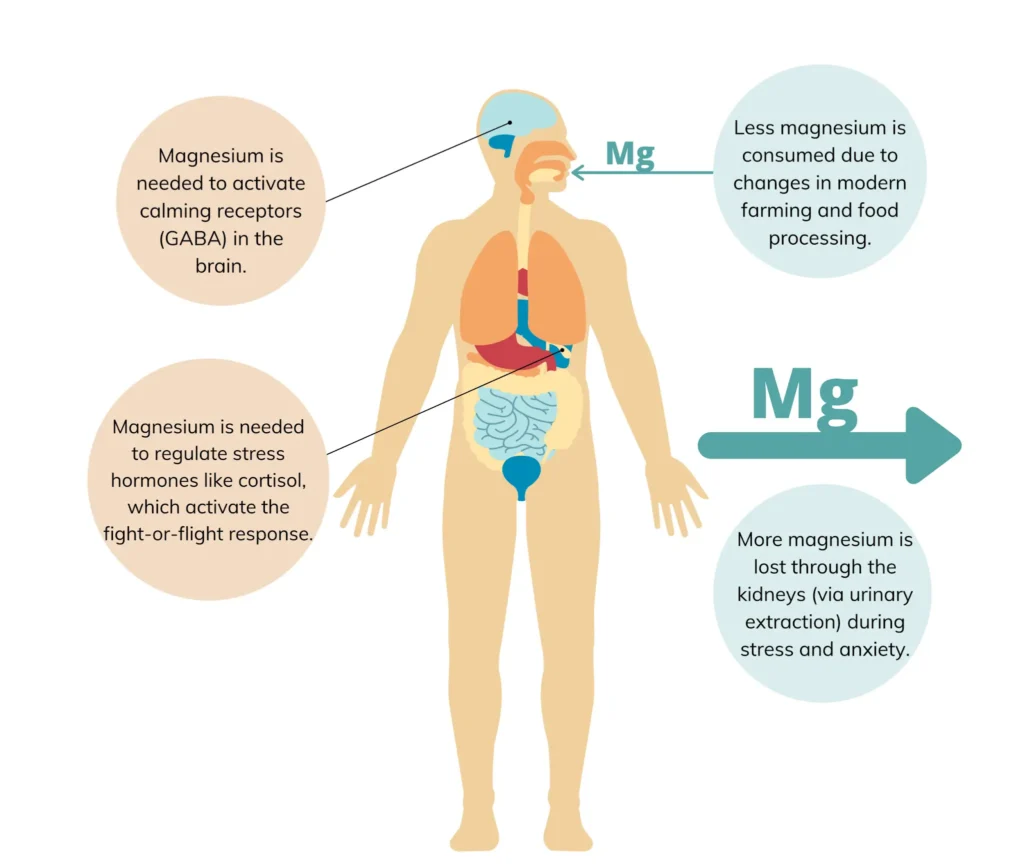
- hormone and stress response
But here is the nuance that matters:
Magnesium does not exist in isolation.
It is always bound to another compound—and that compound determines:
- how well it is absorbed
- where it acts in the body
- what clinical effect it delivers
What Happens When You Choose the Right Form?
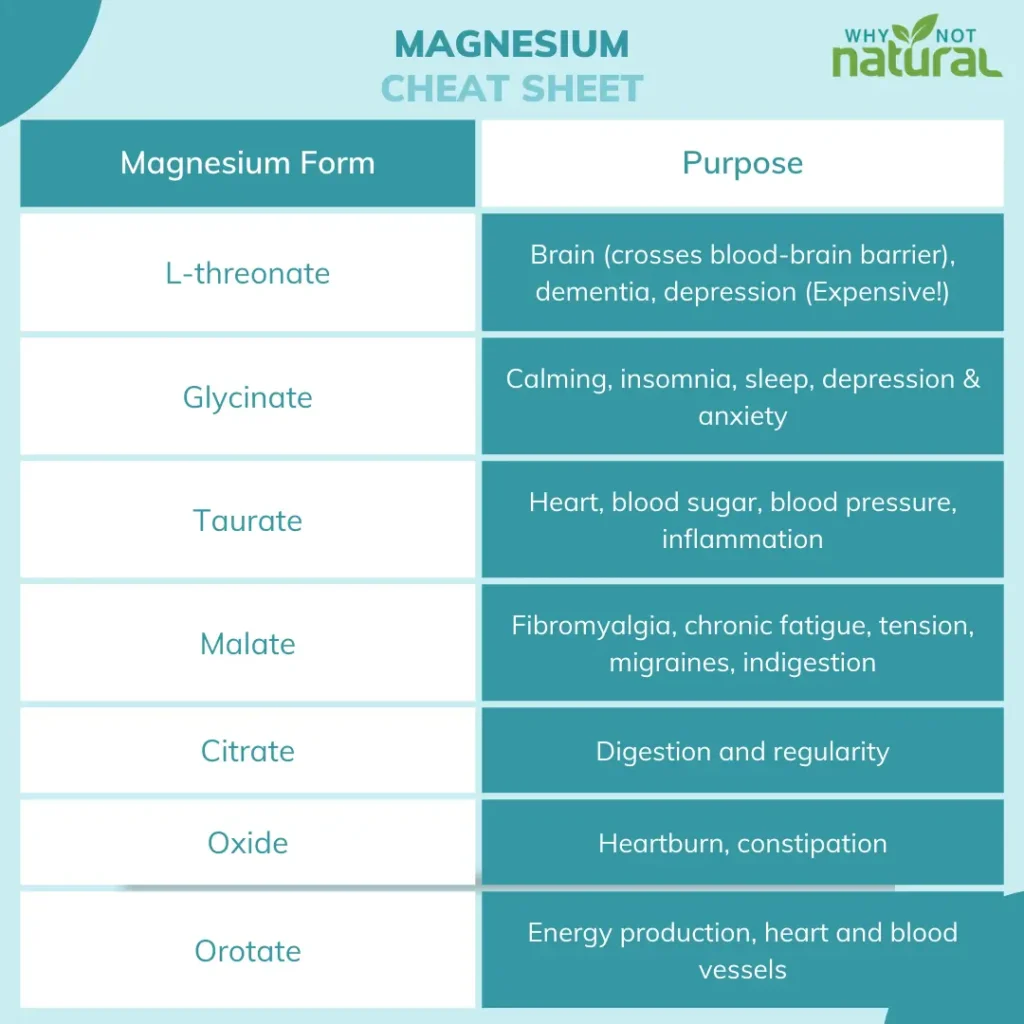
1. Magnesium Glycinate: The Calm, Restorative Form
Magnesium glycinate is bound to glycine, an amino acid known for its calming, inhibitory effects on the nervous system.
This form is particularly well absorbed and gentle on the digestive system.
Where it excels
- nervous system regulation
- stress and anxiety support
- sleep quality
- muscle relaxation
- PMS-related symptoms
Why it feels different
Glycine itself acts as a neurotransmitter, promoting relaxation and improving sleep latency.
So when combined with magnesium, you are not just supplementing a mineral—you are supporting neurophysiological calm.
This is why magnesium glycinate is often the preferred form when the goal is:
restoration, not stimulation
2. Magnesium Citrate: The Functional, Digestive Form
Magnesium citrate is one of the most commonly used forms, known for its osmotic effect in the gut.
Where it excels
- supporting bowel regularity
- short-term relief of constipation
- general magnesium replenishment
What to keep in mind
While well absorbed, magnesium citrate is more functionally active in the gastrointestinal tract, which can limit its suitability for individuals seeking long-term daily use for nervous system or hormonal support.
This is a form we use strategically—not universally.
3. Magnesium Malate: The Energy-Support Form
Magnesium malate is bound to malic acid, a compound involved in the Krebs cycle, the body’s primary pathway for energy production.
Where it excels
- fatigue and low energy
- muscle soreness and recovery
- mitochondrial support
Clinical insight
This form is often considered in individuals experiencing:
- chronic fatigue
- fibromyalgia-type symptoms
- low exercise tolerance
Because here, magnesium is not just calming—it is fueling cellular energy.
4. Magnesium Threonate: The Cognitive Form
Magnesium L-threonate is uniquely studied for its ability to cross the blood-brain barrier.
Where it excels
- cognitive function
- memory and learning
- neuroplasticity
What makes it different
Unlike other forms, magnesium threonate appears to increase magnesium levels in the brain, not just in circulation.
This makes it particularly interesting for:
- cognitive performance
- ageing-related cognitive decline
- high mental demand lifestyles
5. Magnesium Oxide: The Misunderstood Form
Magnesium oxide is widely available—but often misunderstood.
What to know
- lower bioavailability compared to other forms
- primarily used for digestive effects
- not ideal for correcting deficiency at a cellular level
This is a classic example of why form matters more than label claims.
Magnesium and Glycine: A Synergy Worth Understanding
Let us pause here—because this is where the conversation becomes more refined.
Magnesium glycinate is not simply “magnesium + glycine”.
It is a functional synergy between:
- a mineral that regulates neuromuscular activity
- an amino acid that promotes inhibitory neurotransmission
Together, they:
- support parasympathetic activation
- reduce neural excitability
- improve sleep architecture
- enhance recovery from stress
This is why, in clinical practice, magnesium glycinate often feels:
different—not stronger, but smarter
So Which Magnesium Should You Choose?
At nutropia, we do not believe in one-size-fits-all supplementation.
We believe in matching the form to the physiology.
If your focus is…
- Stress, sleep, nervous system → magnesium glycinate
- Digestive support → magnesium citrate
- Energy and fatigue → magnesium malate
- Cognitive function → magnesium threonate
Because when the form aligns with the need, the body responds more efficiently.
A Thought for the nutropia Community
Magnesium is often described as a “basic supplement”.
But there is nothing basic about how it functions in the body.
The difference between:
taking magnesium
and
taking the right magnesium
…is often the difference between no change and real results.
Conclusion
Magnesium remains one of the most essential—and most misunderstood—nutrients in modern nutrition.
Its benefits span:
- nervous system regulation
- energy metabolism
- muscle function
- hormonal balance
- cognitive health
Yet its effectiveness depends not only on whether you take it—but how it is delivered.
Choosing the correct form transforms magnesium from a generic supplement into a targeted physiological tool.
And that is exactly how we approach it at nutropia:
with precision, with evidence, and with respect for the body’s complexity
References (Harvard Style)
Barbagallo, M. & Dominguez, L.J. (2010). Magnesium and metabolic disorders: pathophysiologic and clinical implications. Archives of Biochemistry and Biophysics, 458(1), pp.40–47.
Boyle, N.B. et al. (2017). The effects of magnesium supplementation on subjective anxiety and stress. Nutrients, 9(5), 429.
Castiglioni, S. et al. (2013). Magnesium and osteoporosis: current state of knowledge and future research directions. Nutrients, 5(8), pp.3022–3033.
de Baaij, J.H.F., Hoenderop, J.G.J. & Bindels, R.J.M. (2015). Magnesium in man: implications for health and disease. Physiological Reviews, 95(1), pp.1–46.
Slutsky, I. et al. (2010). Enhancement of learning and memory by elevating brain magnesium. Neuron, 65(2), pp.165–177.
Wienecke, T. & Nørregaard, O. (1995). Magnesium and migraine. Cephalalgia, 15(6), pp.409–412.
Zhang, X. et al. (2017). Effects of magnesium supplementation on glucose metabolism. Nutrients, 9(3), 254.