
A question worth reconsidering
When we observe dysfunction in the body—whether metabolic, hormonal, immunological, or neurological—
are we truly looking at isolated systems, or at the downstream consequences of something more fundamental?
At nutropia, our clinical and scientific perspective consistently returns to one central premise:
the gut is not simply involved in health—it underpins it
Beyond Digestion: The Gut as a Multi-System Regulator
The gastrointestinal tract is often simplified as a digestive organ. In reality, it represents a complex, highly integrated biological system that interfaces with nearly every major physiological pathway.
Functionally, the gut operates as:
- a metabolic regulator, influencing nutrient utilisation and energy homeostasis
- an immune organ, housing approximately 70% of immune cells
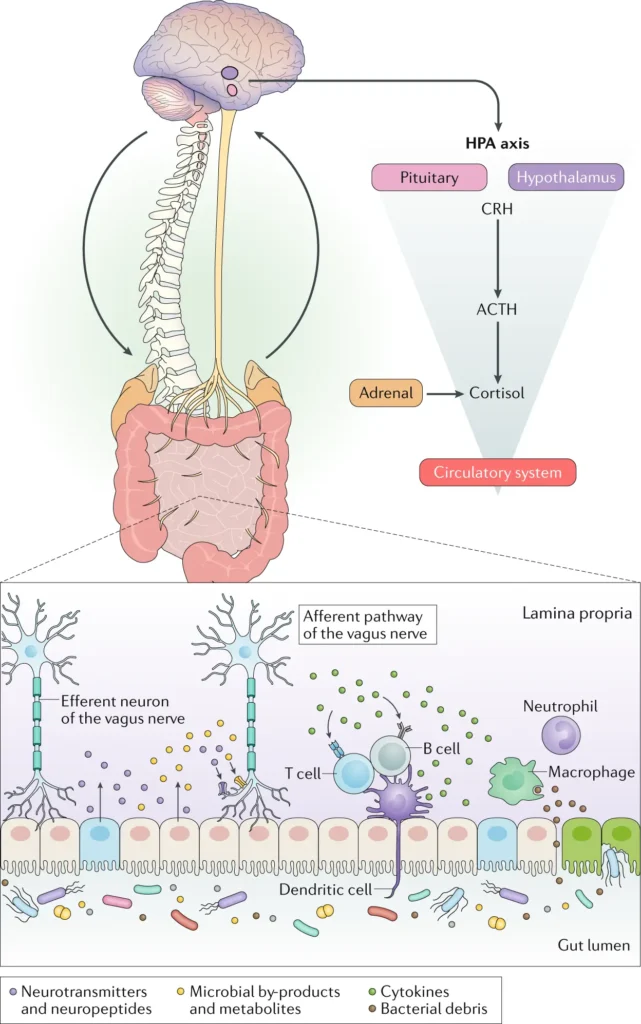
- a neuroendocrine interface, communicating bidirectionally with the central nervous system
- a barrier system, controlling the selective permeability of nutrients and antigens
This multidimensional role explains why disturbances in gut integrity are rarely confined to gastrointestinal symptoms alone.
Physiological Outcomes of an Optimally Functioning Gut
When gut homeostasis is maintained, several key physiological processes are optimised:
- efficient macronutrient and micronutrient absorption
- balanced immune tolerance and reduced chronic inflammation
- stable glucose metabolism and insulin sensitivity
- regulated hormonal signalling pathways
- enhanced production of microbial metabolites such as short-chain fatty acids (SCFAs)
- improved neurochemical balance and cognitive function
This systemic integration reinforces the concept that gut health is not a subsystem—it is a central regulatory axis.
The Gut Microbiome: A Dynamic Metabolic Ecosystem
The gut microbiome comprises trillions of microorganisms, predominantly bacteria, that coexist in a symbiotic relationship with the host.
These microorganisms contribute to host physiology through:
1. Metabolic Function
Fermentation of non-digestible carbohydrates results in the production of SCFAs such as acetate, propionate, and butyrate. These metabolites:
- serve as energy substrates for colonocytes
- regulate glucose and lipid metabolism
- exert anti-inflammatory effects
2. Immune Modulation
The microbiota plays a critical role in shaping immune tolerance, preventing inappropriate immune activation while maintaining defence against pathogens.
3. Neurochemical Influence
Through the gut–brain axis, microbial activity influences neurotransmitter synthesis, vagal signalling, and hypothalamic–pituitary–adrenal (HPA) axis activity.
4. Endocrine Interaction
The microbiome participates in hormone metabolism, including oestrogen recycling via the estrobolome, thereby influencing systemic hormonal balance.
Disruption of Gut Homeostasis: Mechanisms and Consequences
Modern dietary and lifestyle patterns have introduced significant challenges to gut integrity.
Key contributors include:
- high intake of ultra-processed foods
- excessive refined sugars
- chronic psychological stress
- circadian disruption
- repeated antibiotic exposure
These factors may lead to:
Dysbiosis
An imbalance in microbial composition, often characterised by reduced diversity and overrepresentation of opportunistic species.
Increased Intestinal Permeability
Alterations in tight junction proteins may allow translocation of endotoxins (e.g., lipopolysaccharides), contributing to systemic inflammation.
Metabolic Dysregulation
Changes in microbial composition have been associated with insulin resistance, altered lipid metabolism, and adiposity.
Neuroinflammation
Microbial imbalance may influence central nervous system function via immune and neural pathways.
The Gut–Hormone Axis: Clinical Relevance
One of the most clinically significant yet often underappreciated roles of the gut lies in its influence on hormonal regulation.
The estrobolome, a subset of gut bacteria, modulates oestrogen metabolism through enzymatic activity.
Disruption in this system may lead to:
- altered oestrogen clearance
- increased recirculation of active oestrogens
- exacerbation of hormone-sensitive conditions
This mechanism is particularly relevant in conditions such as:
- polycystic ovary syndrome (PCOS)
- premenstrual syndrome (PMS)
- oestrogen dominance-related symptoms
The Gut–Brain Axis: A Bidirectional Communication Network
The gut and brain are connected via neural (vagus nerve), endocrine, and immune pathways.
This bidirectional system regulates:
- stress response
- emotional processing
- cognitive function
- appetite and satiety
Importantly, a significant proportion of serotonin is synthesised within the gastrointestinal tract, further reinforcing the gut’s role in neuropsychological health.
Nutritional Strategies to Support Gut Function
At nutropia, we emphasise evidence-based, physiologically aligned interventions.
1. Dietary Fibre and Prebiotic Substrates
A diet rich in diverse plant-based fibres supports microbial diversity and SCFA production.
2. Fermented Foods and Microbial Diversity
Incorporation of fermented foods may contribute to microbial resilience, although individual responses vary.
3. Polyphenols and Anti-Inflammatory Nutrients
Compounds found in berries, olive oil, green tea, and cocoa exert modulatory effects on the microbiome and inflammatory pathways.
4. Glycaemic Regulation
Stable blood glucose supports both microbiome composition and metabolic health.
5. Omega-3 Fatty Acids
Omega-3s contribute to intestinal barrier integrity and anti-inflammatory signalling.
The Role of Targeted Supplementation
While foundational nutrition remains primary, targeted supplementation can support specific physiological pathways.
At nutropia, this may include:
- My Omega-3 → supporting anti-inflammatory pathways and gut barrier integrity
- My Magnesium → supporting stress modulation and gut–brain axis regulation
Supplementation should always be context-specific and evidence-informed, rather than generic.
A Perspective for the nutropia Community
The tendency to compartmentalise health—digestive, hormonal, neurological—does not reflect biological reality.
The body operates as an integrated system.
And the gut is one of its most influential regulatory centres.
So perhaps the more relevant question is not:
“What symptom am I experiencing?”
But rather:
“What is the state of the system that underlies it?”
Conclusion
The gastrointestinal system represents a central interface between environment, metabolism, immunity, and neurological function.
Emerging scientific evidence continues to reinforce that gut health plays a foundational role in:
- systemic inflammation
- metabolic regulation
- hormonal balance
- neurocognitive function
Supporting gut integrity is therefore not a niche intervention—it is a core strategy in preventative and functional nutrition.
At nutropia, we approach gut health not as a trend, but as a biological priority.
References (Harvard Style)
Cryan, J.F. et al. (2019). The microbiota–gut–brain axis. Physiological Reviews, 99(4), pp.1877–2013.
Lynch, S.V. & Pedersen, O. (2016). The human intestinal microbiome in health and disease. New England Journal of Medicine, 375(24), pp.2369–2379.
Rinninella, E. et al. (2019). What is the healthy gut microbiota composition? Microorganisms, 7(1), 14.
Shreiner, A.B., Kao, J.Y. & Young, V.B. (2015). The gut microbiome in health and disease. Current Opinion in Gastroenterology, 31(1), pp.69–75.
Tilg, H. & Moschen, A.R. (2014). Microbiota and metabolic inflammation. Gut, 63(9), pp.1513–1521.
Turnbaugh, P.J. et al. (2006). An obesity-associated gut microbiome with increased capacity for energy harvest. Nature, 444, pp.1027–1031.
Cani, P.D. et al. (2007). Metabolic endotoxemia initiates obesity and insulin resistance. Diabetes, 56(7), pp.1761–1772.